
Sunday 21st June 2026
“Travel makes me appreciate what I have.”
It’s a phrase that’s easy to dismiss as a travel cliché, yet as we explored Sekondi-Takoradi on Ghana’s western coast, I found myself thinking it more than once.
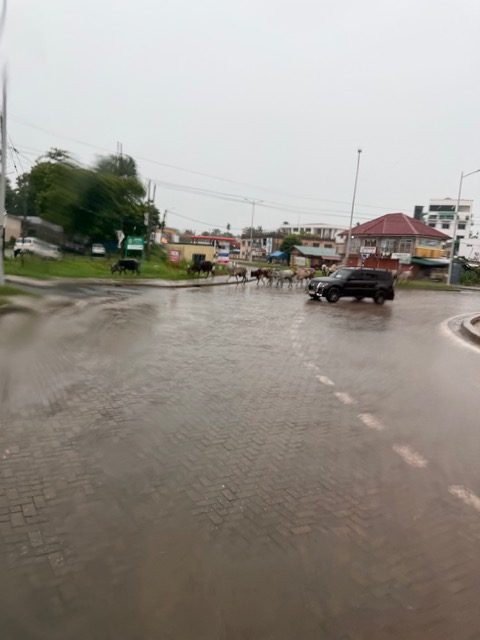
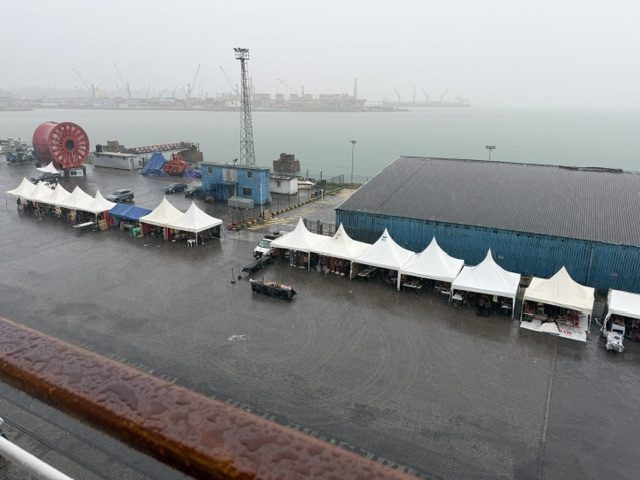
Our ship arrived in the twin city of Sekondi-Takoradi just before 9am under heavy skies and tropical rain – not unusual for June, which falls within Ghana’s rainy season. The city is one of Ghana’s two major seaports and plays an important role in the country’s export industry. Although Accra is Ghana’s capital, much of the nation’s trade still passes through this port.
Ghana, formerly known as the Gold Coast, gained independence in 1957. The region’s history is deeply intertwined with both the gold trade and the trans-Atlantic slave trade, whose impacts are still felt today.
After yesterday’s tour, I was a little sceptical about today’s but thankfully was proved wrong. I did try to find out more about the railway museum I’d spotted on a Ghana travel site, but it appears it may no longer be open. So, the decision was made to take the ‘Twin-city’ 3-hour ship’s tour we had booked (for free).
There was 39 on today’s bus, and thankfully the young American man from yesterday’s excursion in Benin had chosen another tour 🙂 As we drove through the city, our guide Hassan taught us a few local customs and words. No shouting today either – there was a microphone on the bus! One lesson Hassan taught us was never to use your left hand when giving or receiving something, which I found particularly interesting being cack-handed myself! We also learned “Medaase” – thank you – a word I attempted throughout the day with varying degrees of success.
English is Ghana’s official language, but it is only one of more than 65 languages and dialects spoken across the country. Many children grow up speaking three or more languages, an achievement that puts my high school French to shame.
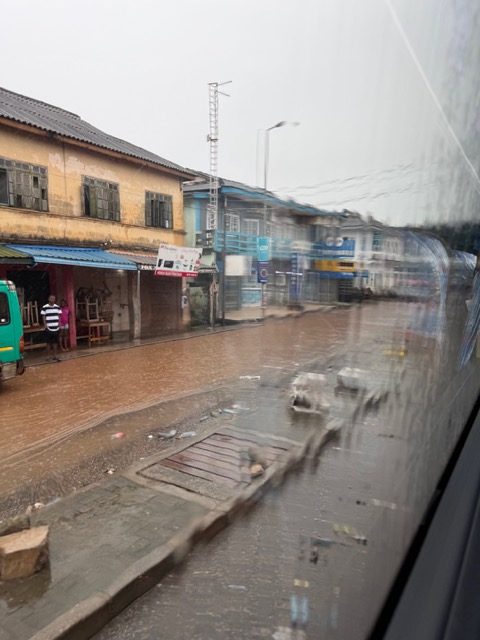
What struck me most was the contrast. There is considerable wealth in Ghana through natural resources including gold and cocoa, yet some of the infrastructure we passed appeared severely neglected. One public building looked almost abandoned despite still being in use. I did giggle a little that it was the ‘Public Works’ workshop!
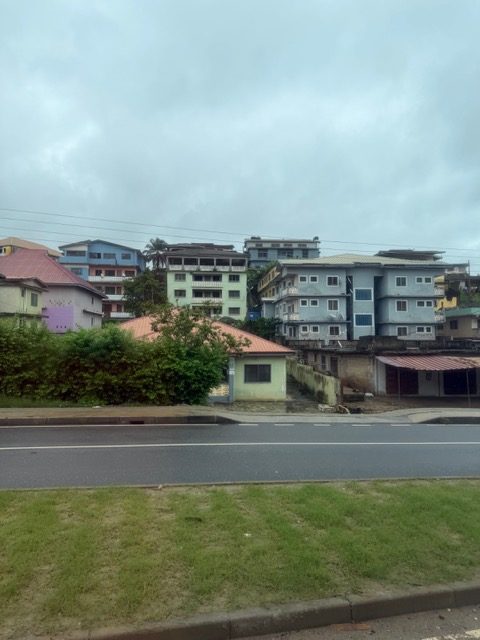
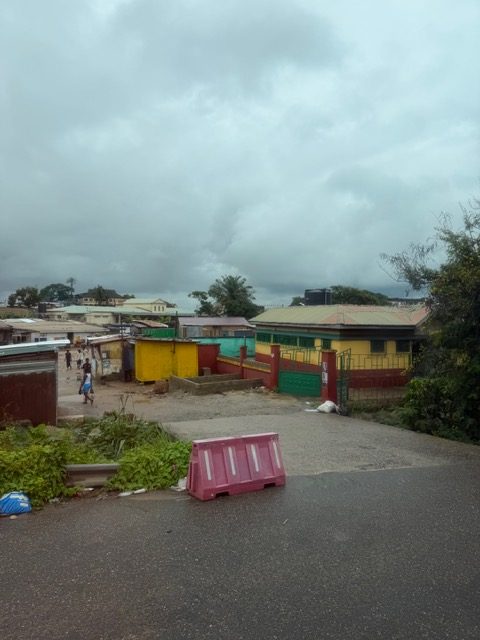
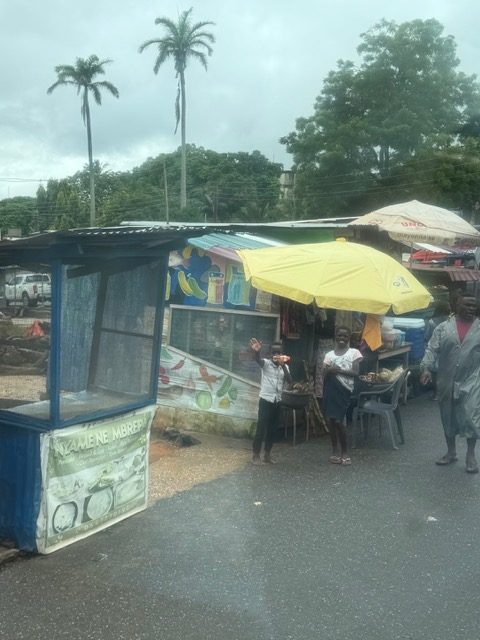
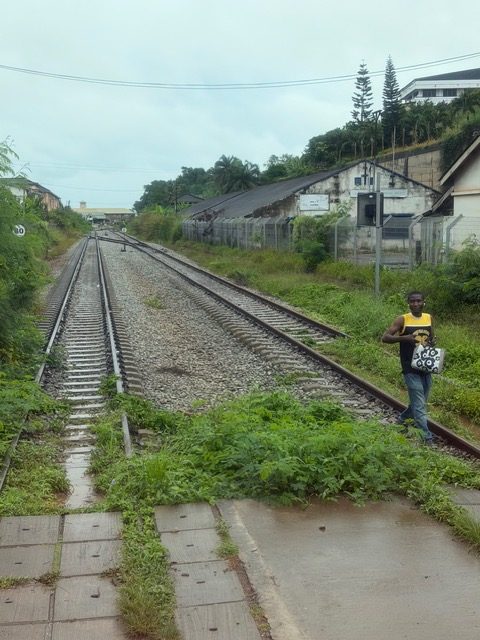
Our first stop was the fishing harbour, where we gained an insight into one of Ghana’s most important industries. Fishing boats can spend up to three days at sea before returning with their catch. We toured an ice-making site at the harbour facility where enormous 25-kilogram blocks of ice are produced and sold to fishermen for around US$1.50 each. I was pleased to see good food hygiene practices being used! Fish is a dietary staple in Ghana and provides roughly 60 per cent of the animal protein consumed by the average Ghanaian.
The Ghanian people we met were warm and welcoming. We also discovered that being described as “strong” (aka fat) is considered a compliment here – quite a different perspective from many Western cultures, and one I think should be encouraged 😉
Ghana’s health story is an interesting one. Life expectancy for the 35 million population is around 65 years (Benin’s was 61, and Australia is 83), slightly higher than Africa’s average of 64. While infectious diseases such as malaria and tuberculosis remain challenges, interestingly strokes (followed by heart disease) have recently become the leading cause of death. Like many developing nations, Ghana is navigating a double burden of malnutrition and stunting in children, where undernutrition still exists alongside rising rates of obesity caused by increases in access to processed and poor-quality food.
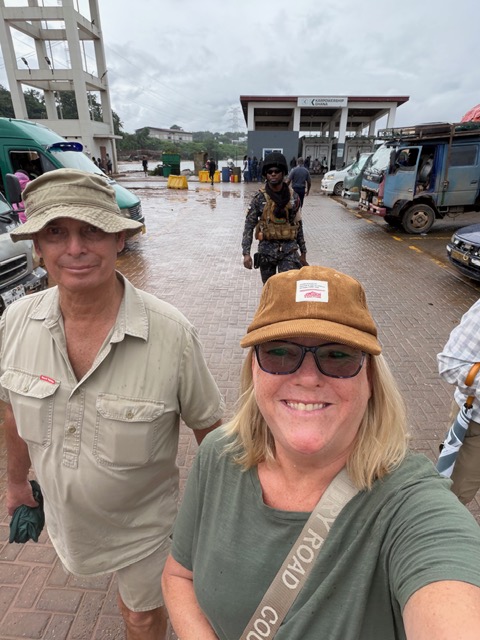
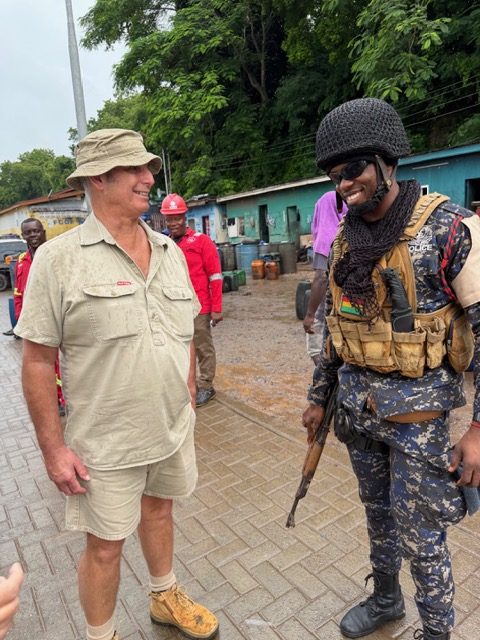
One unexpected highlight was watching Dave in action. While I don’t naturally gravitate towards meeting strangers, Dave thrives on it. As we were wandering around the fishing wharves it wasn’t long before he had struck up a conversation with a SWAT Police corporal who had been quietly following the group, eventually discovering they shared an interest in helicopter operations. It’s amazing what you can learn simply by saying hello. The young man was carrying an AK47 and looked the part – when others saw me taking a photo of Dave talking to him, they started to line up for the same. Thankfully he was happy for pictures.
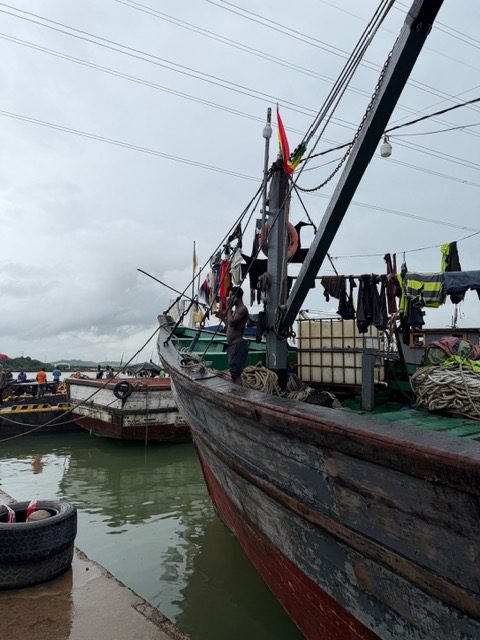
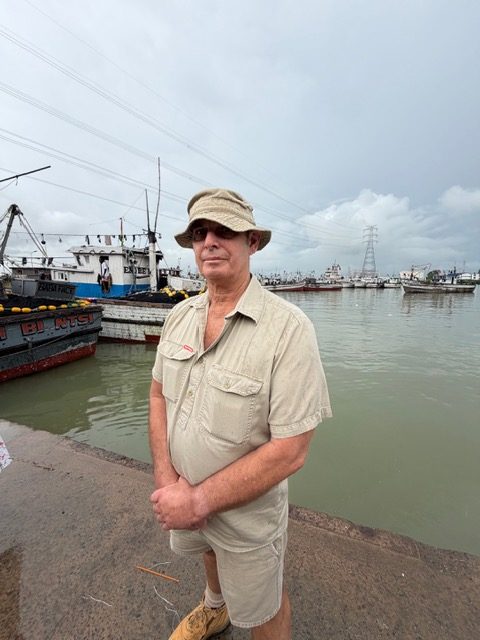
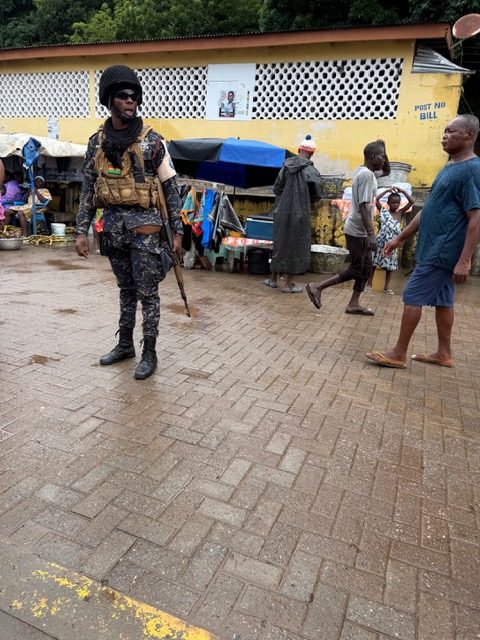
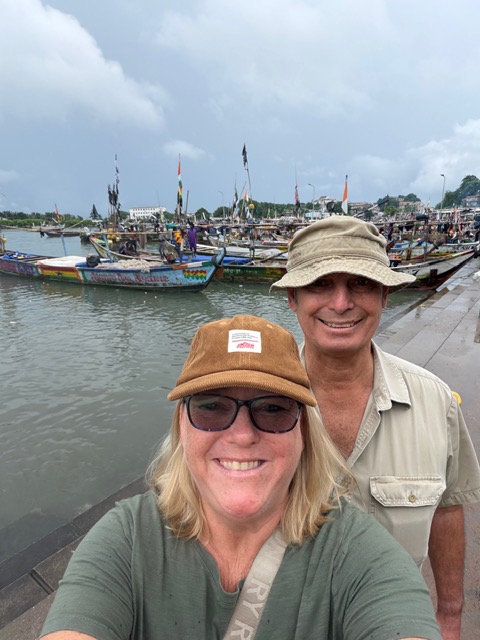
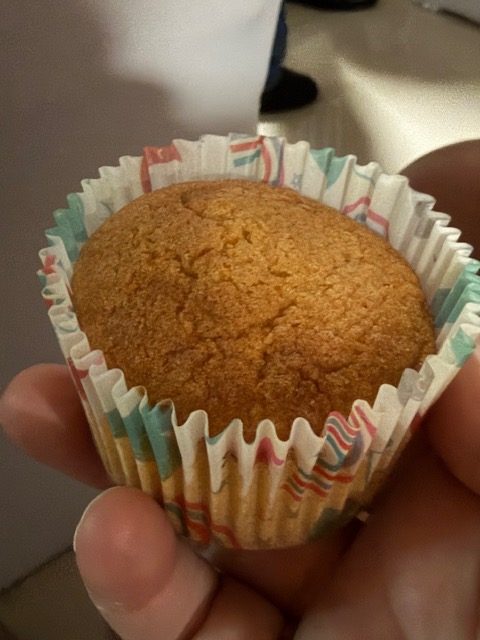
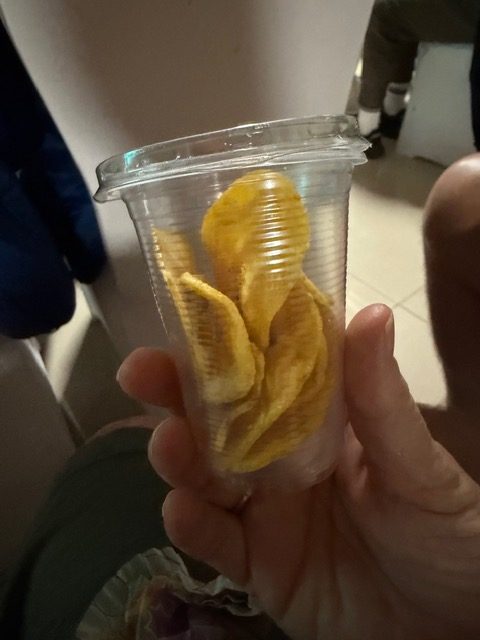
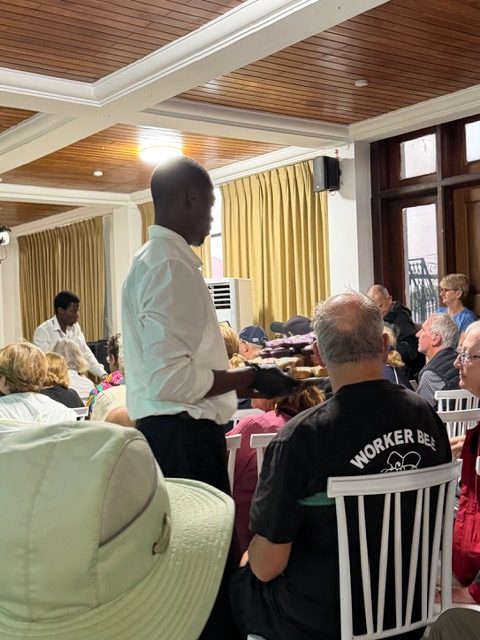
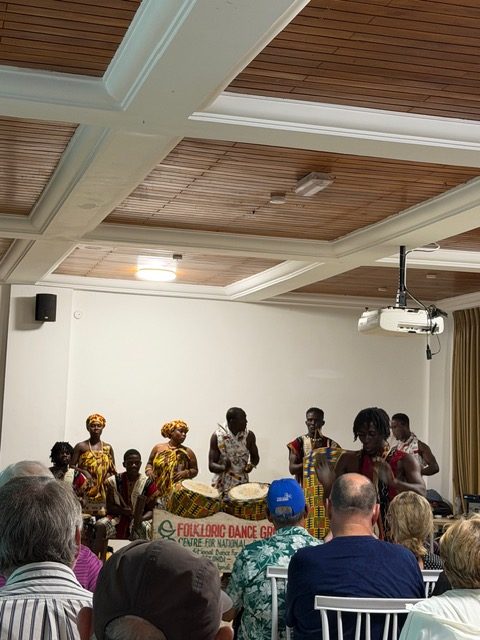
We headed back to the middle of the city and stopped at a local hotel where we sampled some foods and watched cultural dancing accompanied by very loud drum beating. Banntey, made from cassava, and Kelewele, a spicy fried plantain dish, offered a taste of everyday Ghanaian cuisine. Neither looked particularly glamorous, but both were delicious. The plantain chips were my favourite; Dave liked the ‘special Ghanian’ cupcakes 😉
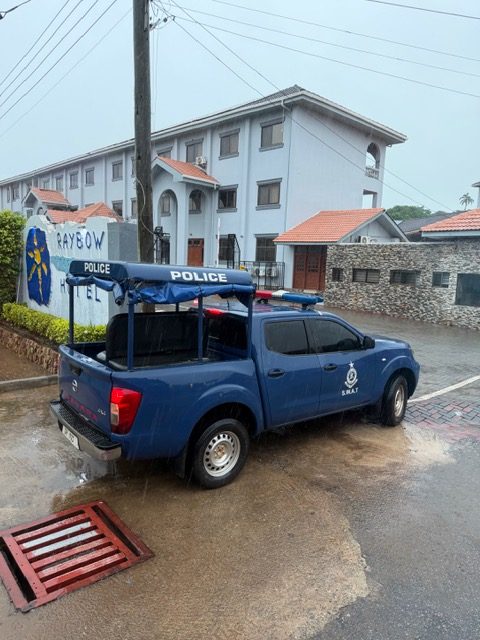
Throughout the day we were accompanied by security escorts, and we passed a prison where guards stood watch carrying AK-47s. Yet despite these visible reminders of security concerns, Ghana is generally considered one of the safer and more politically stable countries in West Africa.
As we returned to the ship, the constant rain had picked up to what is commonly known as ‘pissing down’. The infrastructure didn’t appear to cope too well and I was happy that we were in a bus rather than one of the small taxis we saw.
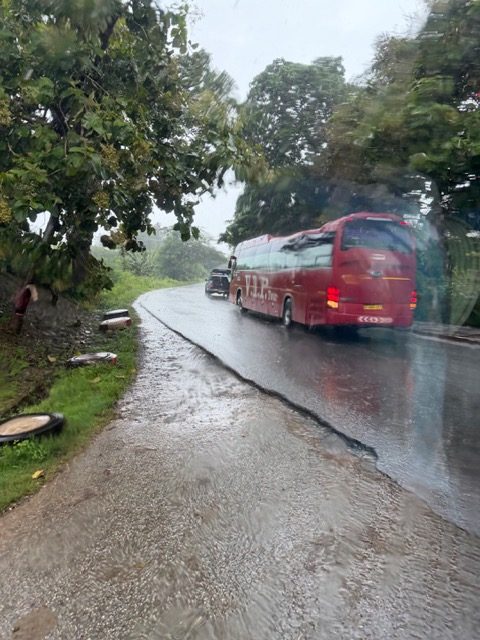
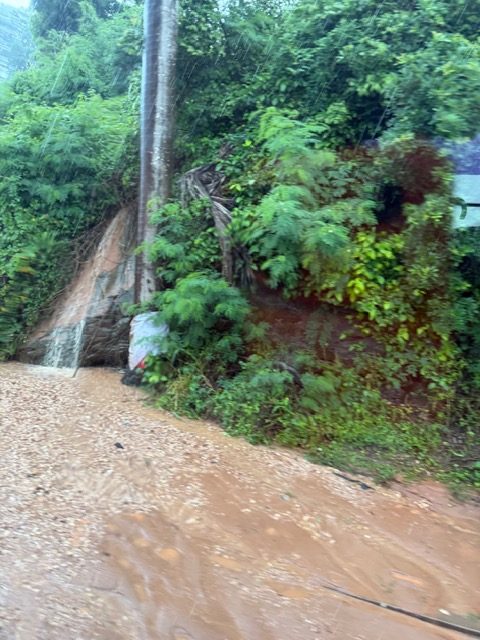
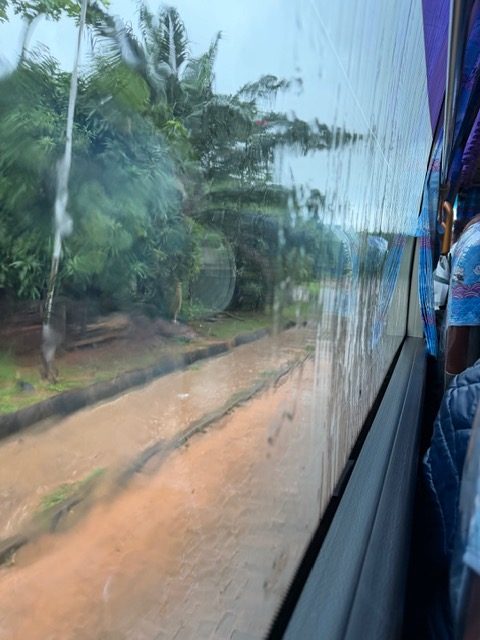
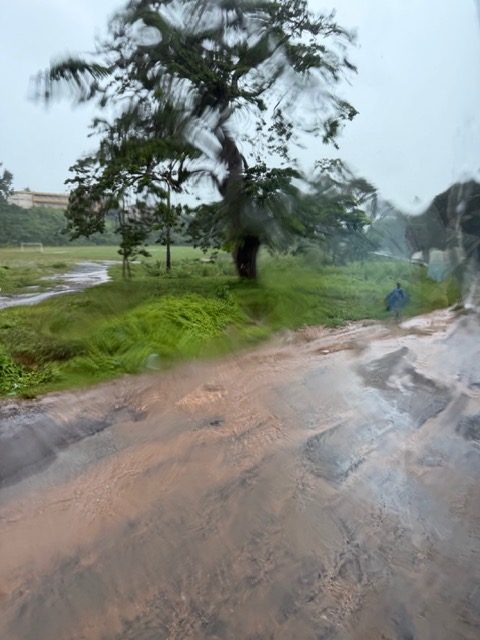
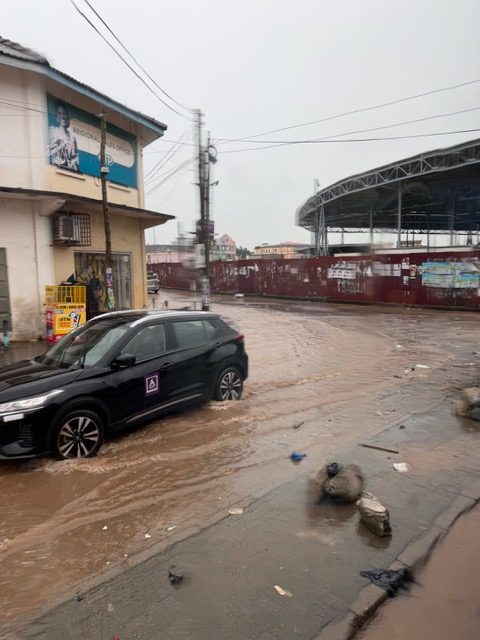
Sekondi-Takoradi isn’t polished. It isn’t wealthy by western standards. But it is real, hardworking and interesting. Travel doesn’t always have to be about beautiful scenery or famous landmarks. Sometimes it is about seeing how other people live, understanding their challenges and appreciating their strengths.
And yes, perhaps appreciating what we have too.
Tomorrow we will be in Abidjan, which is the largest city and the former capital of Ivory Coast. I’ve never met anyone who has ever visited Ivory Coast, let alone comes from there. I’m looking forward to it and hoping the rain stops, although another rocky night on the seas would be fun!
Sara xx
My Father -in-law could, and would, talk to anyone at all. I am definitely not good at it! I do like to make comments to strangers in passing, for some reason, but do not at all like having to approach new people.
We are a lot alike Amy… making comments to strangers is no problem to me either haha 😉