
Sunday 28th June 2026
After several fascinating (and rather warm!) ports along the West African coast, arriving in Cabo Verde felt like someone had quietly adjusted the thermostat.
Twenty-six degrees, a gentle breeze and much lower humidity. Suddenly walking around outside became enjoyable again!
Today we docked in the city of Mindelo, on the island of São Vicente, one of ten islands that make up the Republic of Cabo Verde. Lying around 600 kilometres off the west coast of Africa, the islands actually have more people with Cape Verdean roots living overseas than they do at home. This island is the second biggest of the 10 and is home to around 85,000 of the total population of 520,000 people. The island is 227 sq. km in size, smaller even then Taveuni in Fiji (where Dad lives quite a bit of the year) which is 434 sq. km by comparison.
We’d booked a 3½-hour “Highlights of Cape Verde” tour, so after walking the short distance from the ship to our minibus (no shuttle required today), we met our lovely guide, Elba, who immediately made us feel very welcome.
As we drove through Mindelo she explained that Portuguese is the official language, although almost everyone speaks Cape Verdean Creole in everyday life. School is free and compulsory until the age of 13, but after that further education depends on family income. There are only two universities in the whole country—one here in Mindelo and one on the island of Santiago.
One statistic she shared was a little sobering.
Around 58 per cent of people are unemployed, and even graduates often struggle to find work. Tourism now accounts for around 70 per cent of the country’s economy, with around a million visitors arriving each year. It’s a beautiful country, but jobs remain a real challenge.
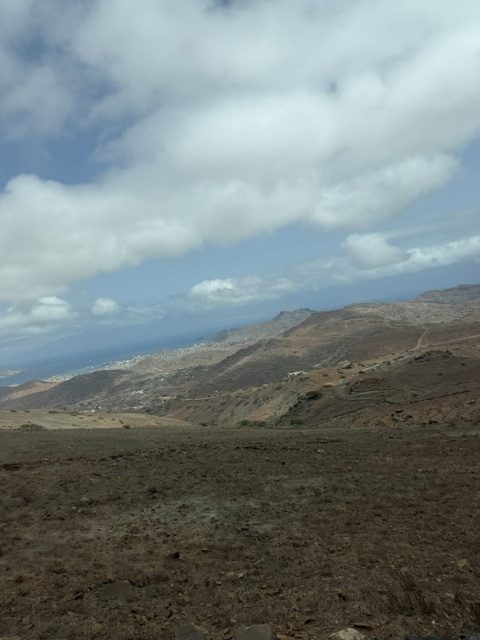
One thing we couldn’t help noticing was how dry everything was.
Cape Verde is one of the driest countries in the world. Around 90 per cent of its food has to be imported because so little land can be farmed, and almost all of the island’s drinking water comes from desalination plants. We drove through old farming areas where many attempts at agriculture have simply been abandoned because there’s just not enough reliable rainfall.
Ironically, Elba told us that last August they experienced torrential rain from a rare tropical storm. Flooding killed seven people and damaged many homes—something almost unheard of here.
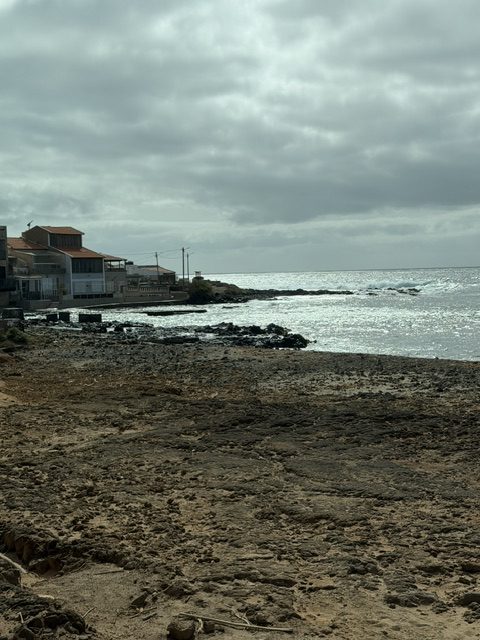
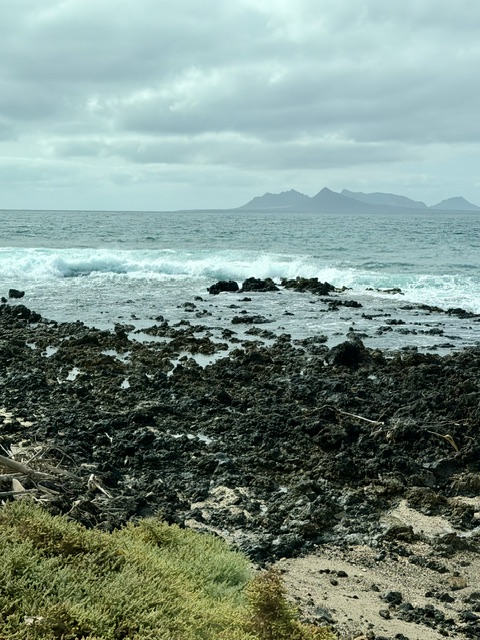
Our first stop was Baía das Gatas (Catfish Bay).
Despite the name, there weren’t any catfish to be seen. Apparently, the bay was named after sharks that were once common here.
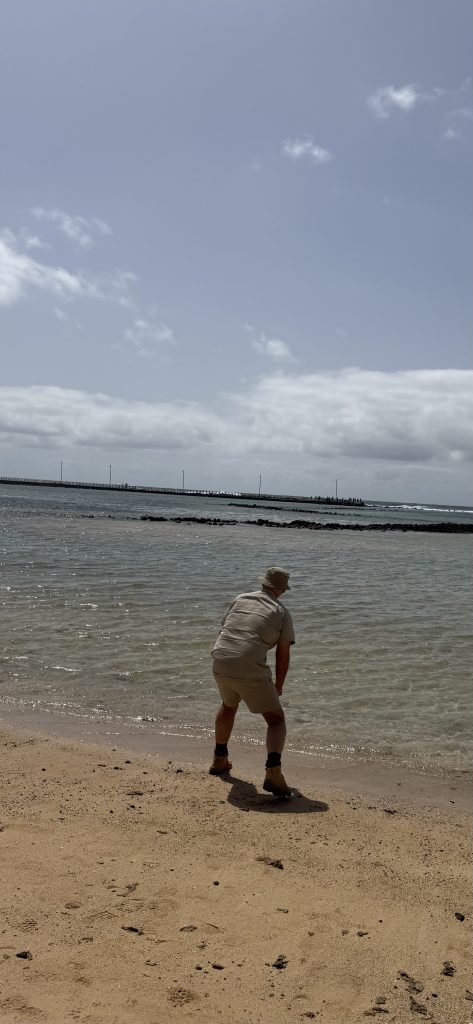
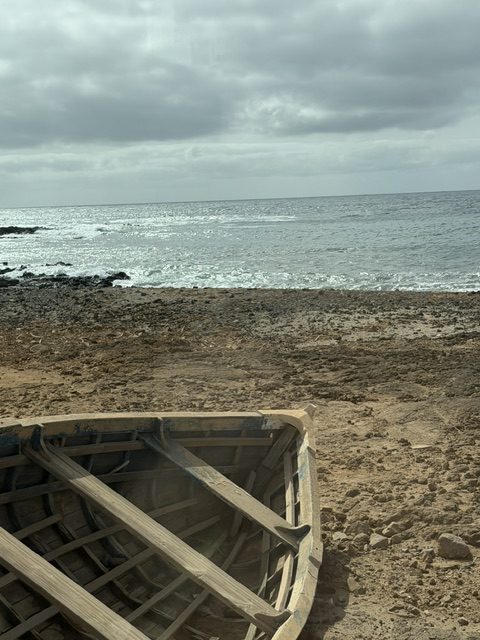
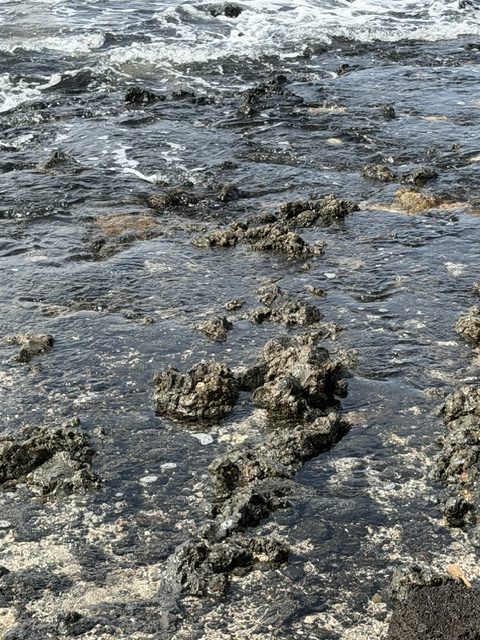
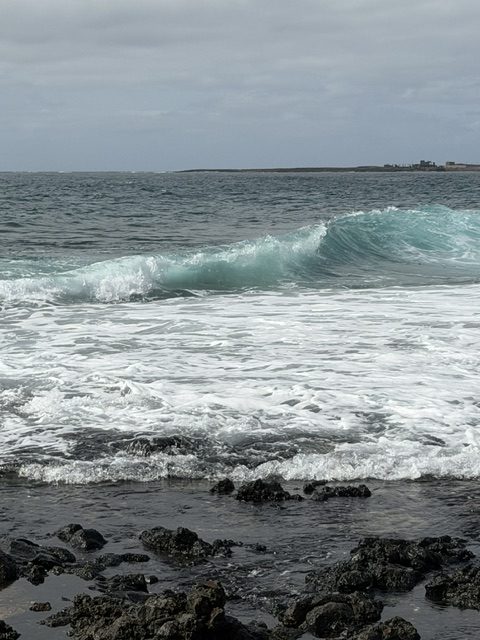
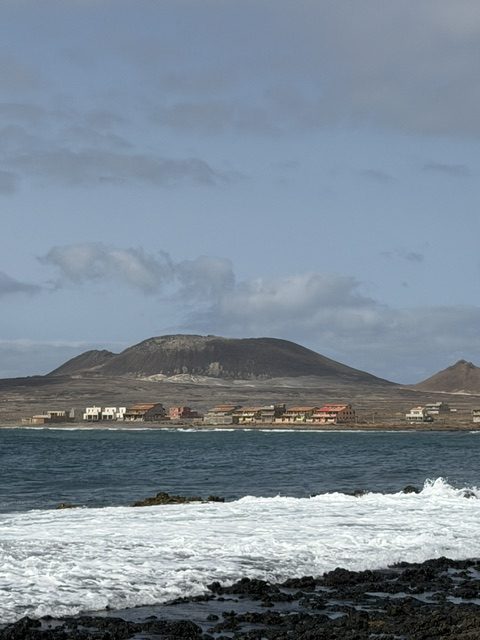
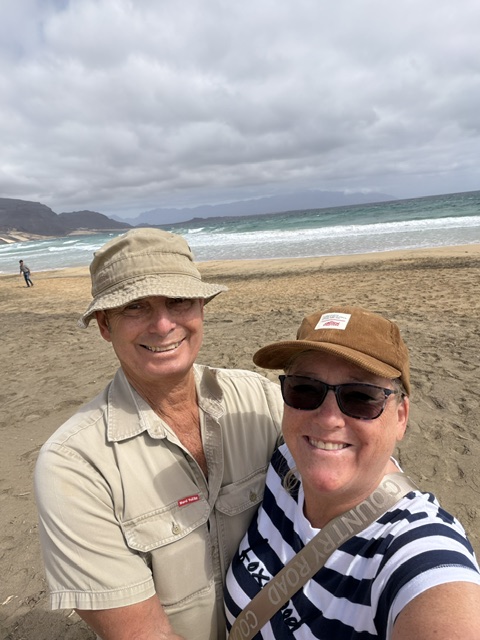
It was a lovely spot with calm turquoise water, locals swimming, healthy-looking dogs wandering around and some very impressive holiday homes overlooking the bay.
Naturally, Dave’s attention was immediately drawn to the perfect flat stone lying on the beach.
Yes… there was stone skipping!
The bay also hosts Cabo Verde’s biggest music festival every August, across four days, attracting thousands of people from across the islands and even around the world. Last year 80,000 attended!
Next we stopped near one of the beaches where loggerhead turtles come ashore to lay their eggs. Cape Verde is actually home to the world’s third-largest nesting population of loggerhead turtles. Local volunteers patrol the beaches during nesting season, helping protect both the eggs and the hatchlings, and helping the turtles back to the sea.
At the nearby turtle rescue centre, we met one particularly determined turtle named Caesar, who had survived a shark attack despite losing one of its front flippers. Unfortunately, he’s not healed well enough to return to the sea 🙁
Another stop took us to a small oasis in the middle of the island where locals are experimenting with growing fruit and vegetables despite the harsh climate. It was amazing to see patches of green surrounded by otherwise rocky, brown hills.
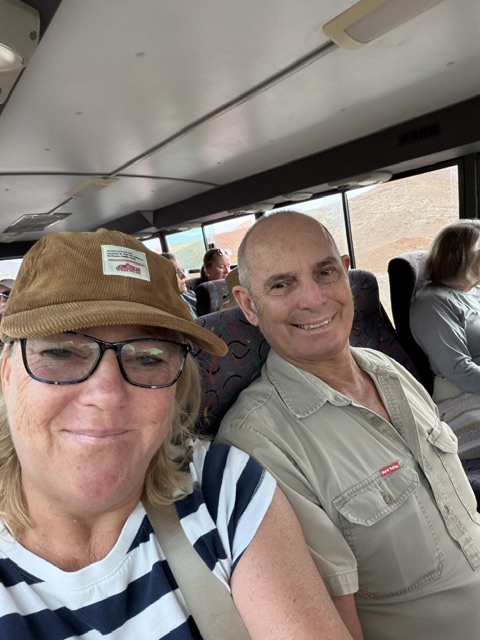
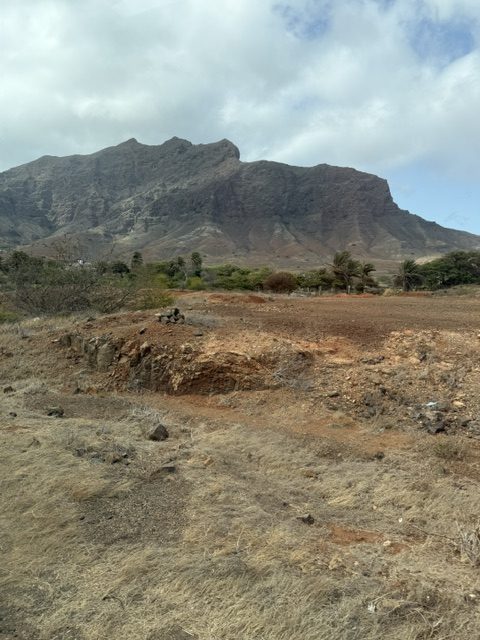
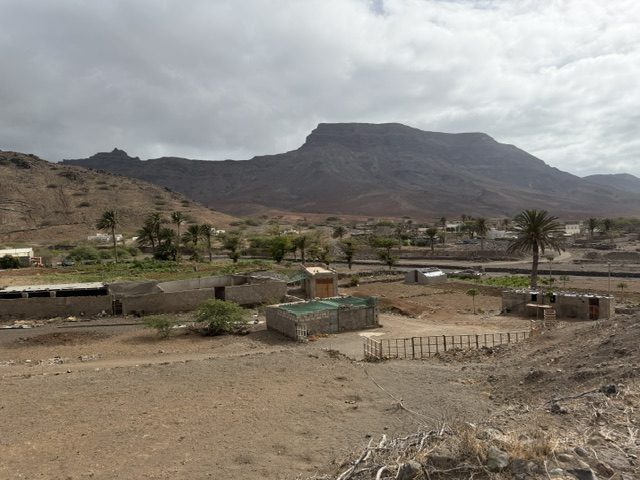
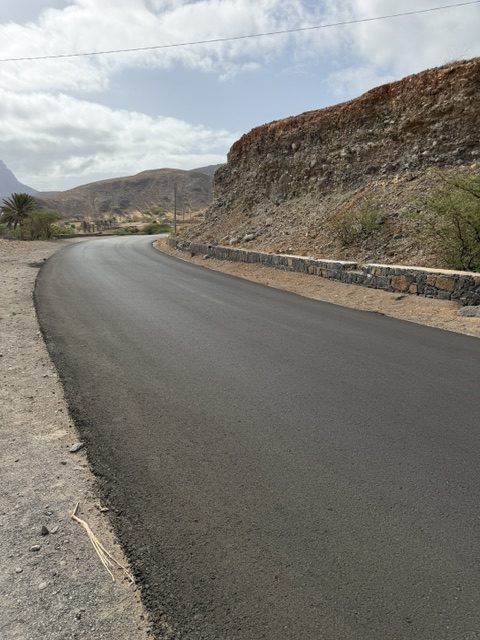
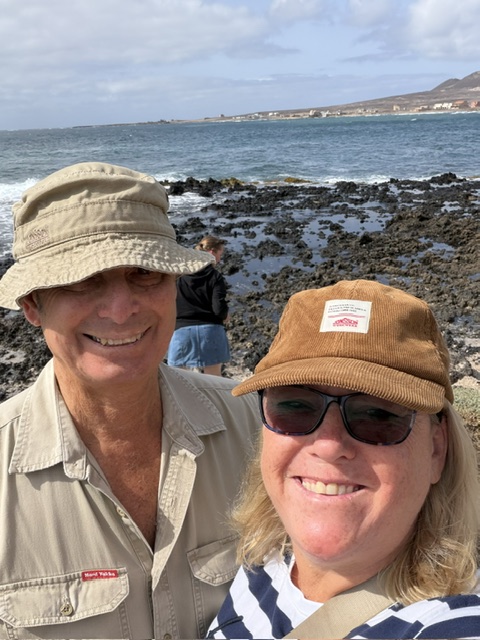
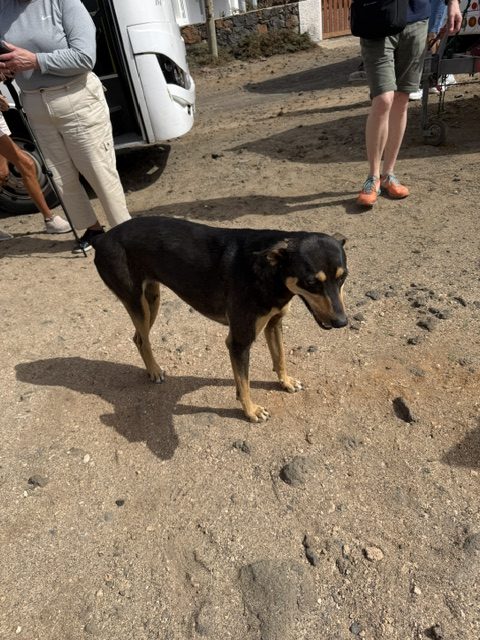
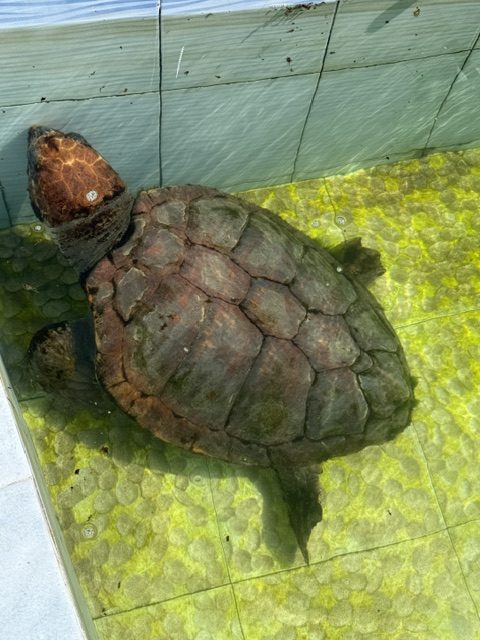
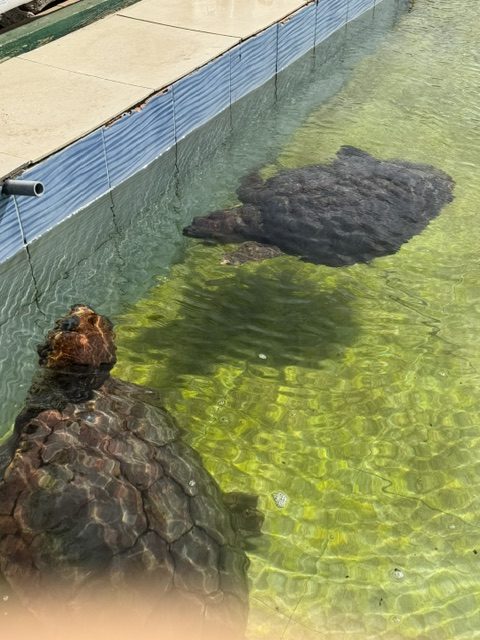
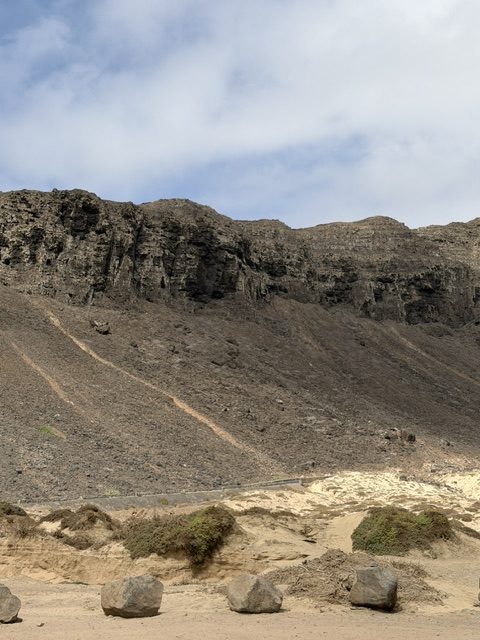
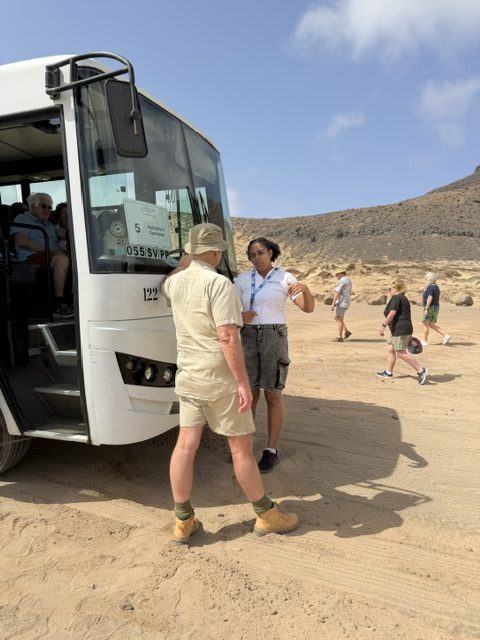
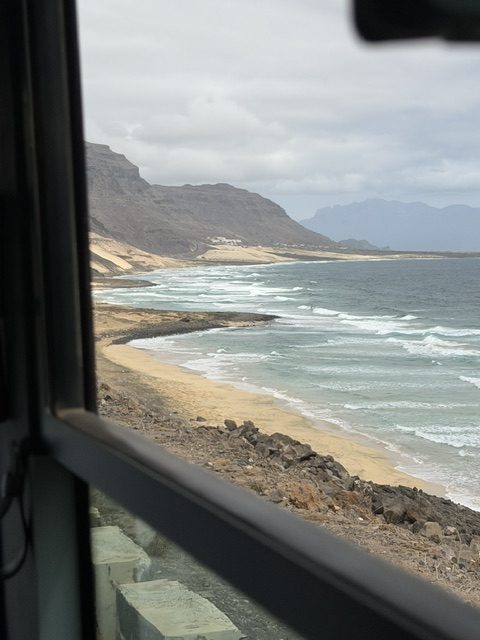
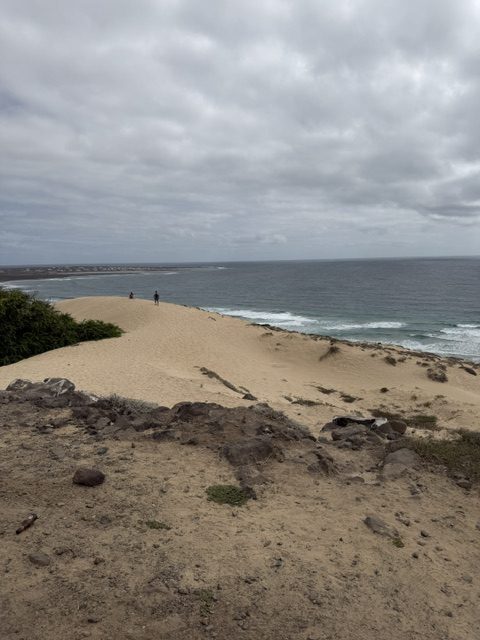
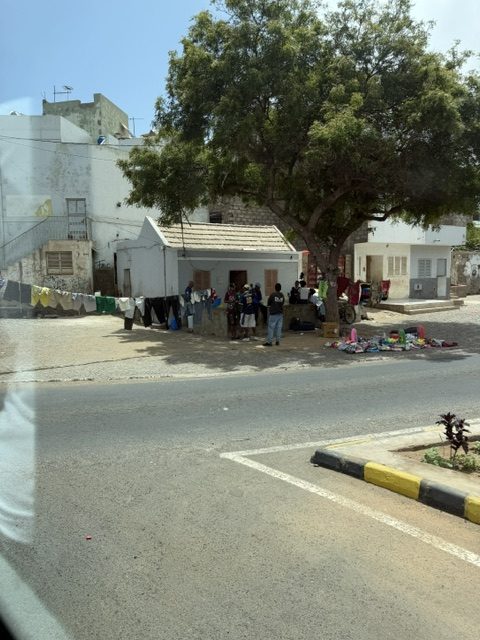
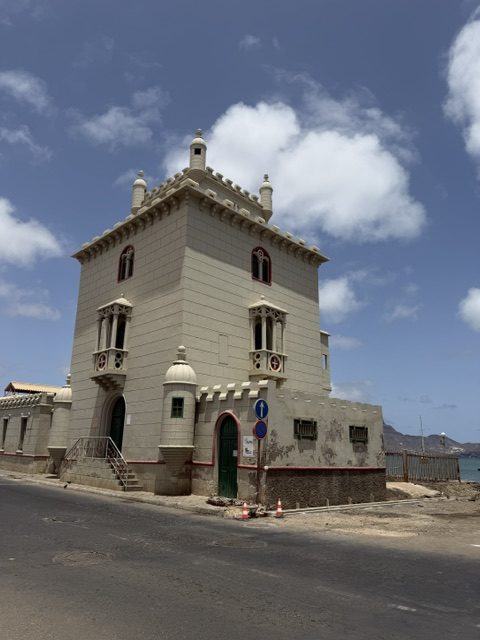
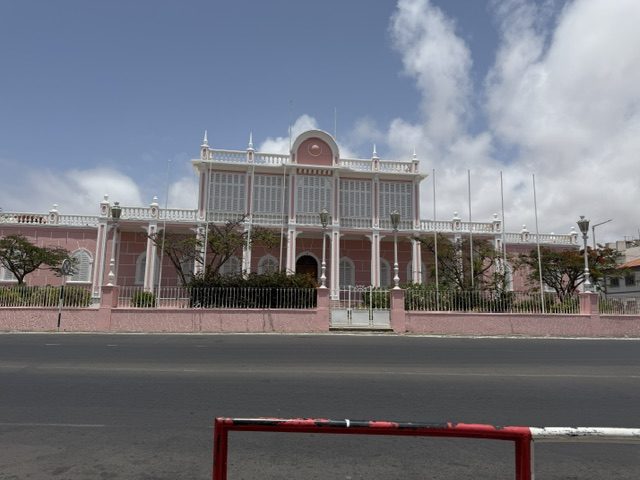
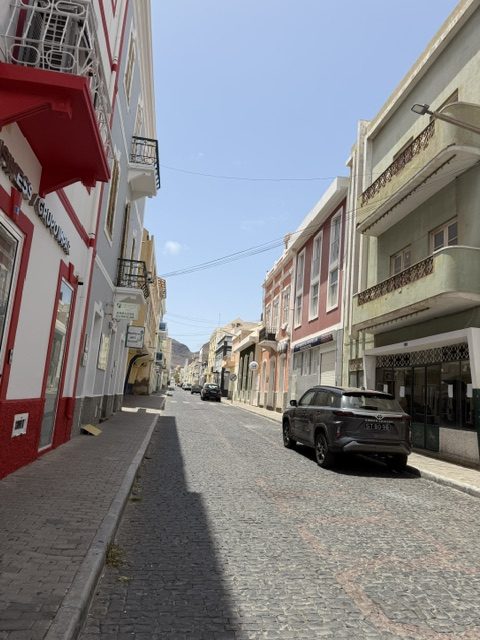
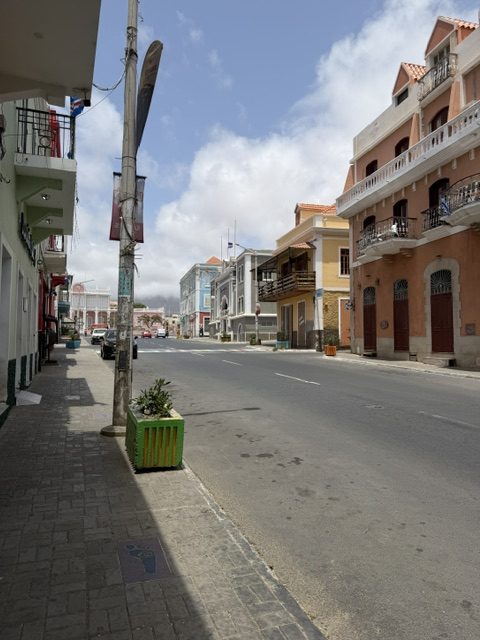
Along the way we passed several large solar farms, a new shrimp farm, surprisingly good roads and even a few (very dusty) soccer pitches. According to our guide many of the new resources are supplied as part of aid to the country. Japan, for example, has provided all the solar farms.
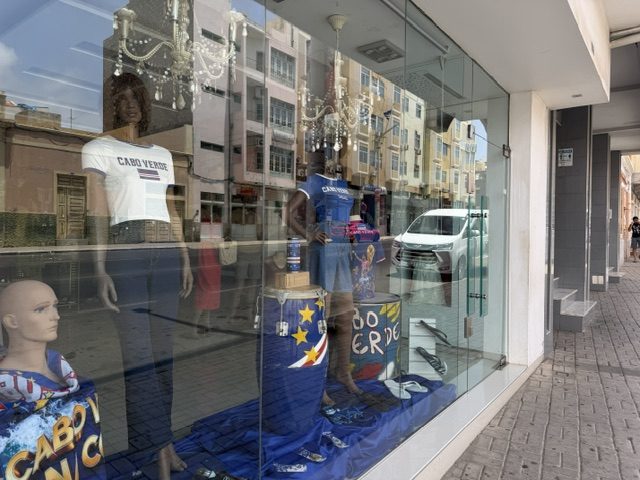
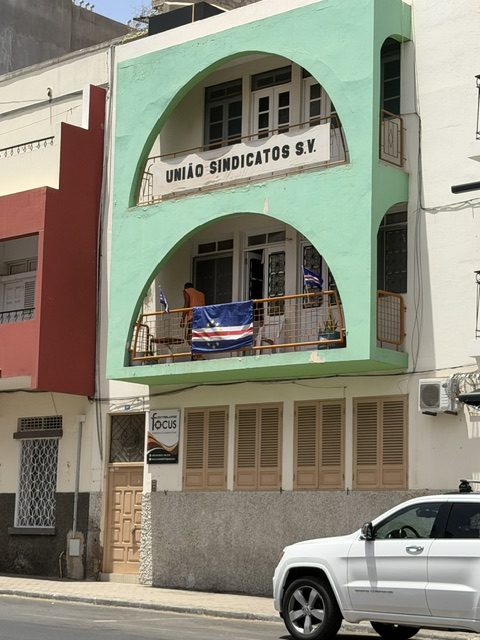
Our guide proudly told us that Cabo Verde had become the smallest nation ever to reach the knockout stages of the FIFA World Cup. You could tell football is a huge source of national pride here, with shops and homes displaying football shirts and flags. My friend Steph had asked me about the World Cup in Africa yesterday – and today we saw lots of support for it!
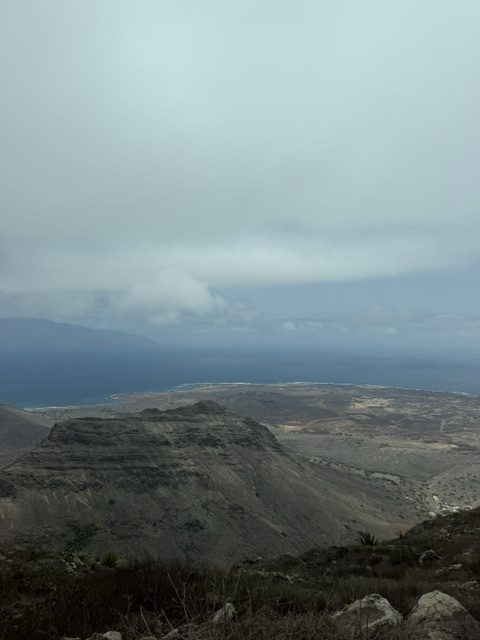
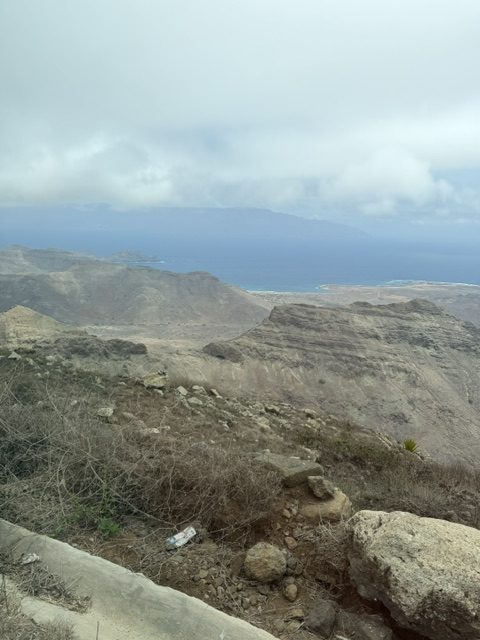
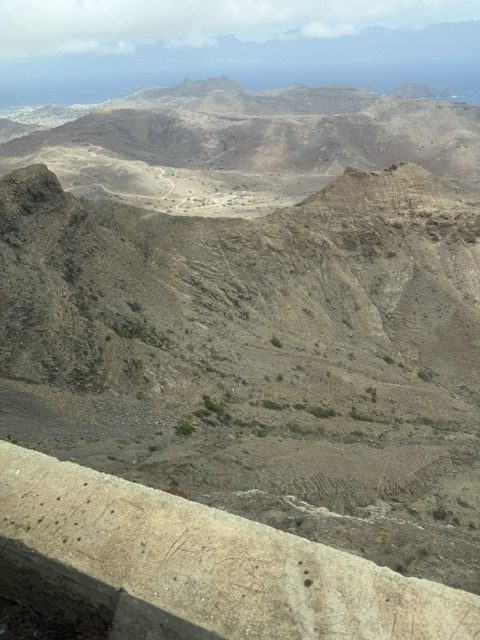
Our final stop on the tour was Monte Verde—Green Mountain.
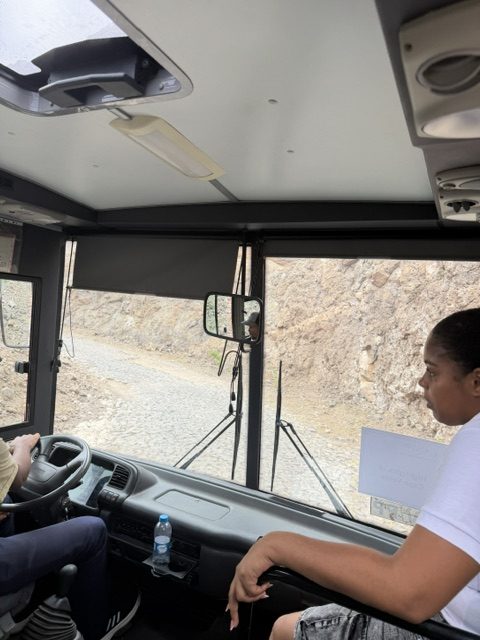
At around 750 metres it’s the highest point on São Vicente and reaching the top involves a very narrow cobblestone road that took six years to build.
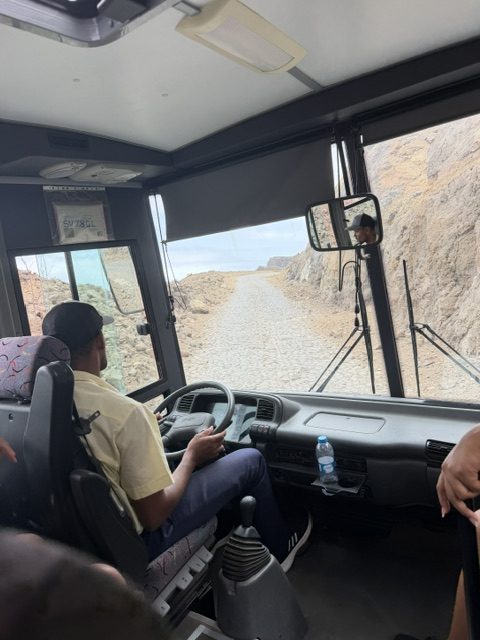
As we climbed higher the road became steeper, narrower and featured increasingly impressive drop-offs.
It reminded me just a little of Bolivia’s famous Death Road which we visited last year (and I blogged about it)… although thankfully there wasn’t any oncoming traffic trying to overtake buses, or roads collapsing, but the sheer drops off the side of the road were equally as worrying!
Our driver seemed completely unfazed.
Our guide, meanwhile, chatted happily beside him the entire way.
I, on the other hand, was quietly wondering if perhaps a little less conversation and a little more concentration might be the better option!
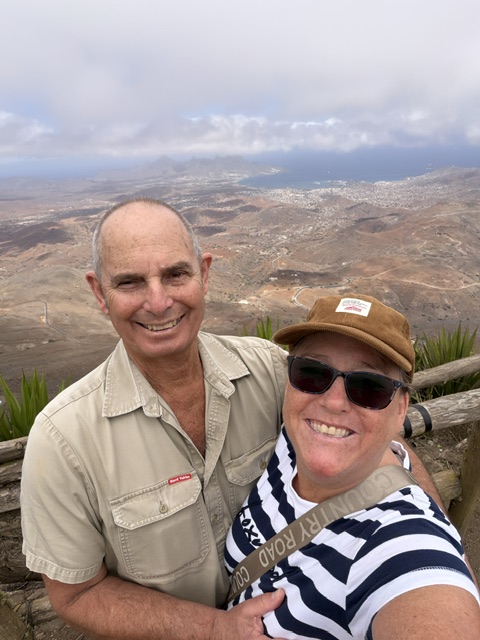
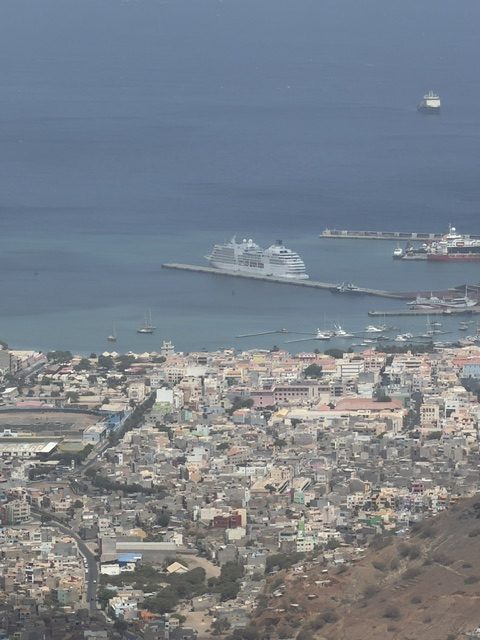
The views from the top were spectacular, stretching across the whole island and out over the Atlantic, we could even see our ship in the harbour in the distance!
There was just one small problem.
Our tour had gone for more than three hours…
…without a single toilet stop.
Unfortunately, we’d both forgotten to bring the water bottle I’d carefully filled with ice and water this morning, which seemed like an oversight until I realised there wasn’t a bathroom anywhere on the itinerary. Suddenly forgetting the water didn’t seem like such a bad decision after all!
By the time we reached the bottom of the mountain every bump in the cobblestone road felt entirely unnecessary.
Then our guide cheerfully announced we would head back to the ship, but then unexpectedly changed her mind and decided to have one final stop at the African markets, where there were no bathrooms!
I probably would have enjoyed looking at the markets, but all I could think about was finding the nearest toilet.
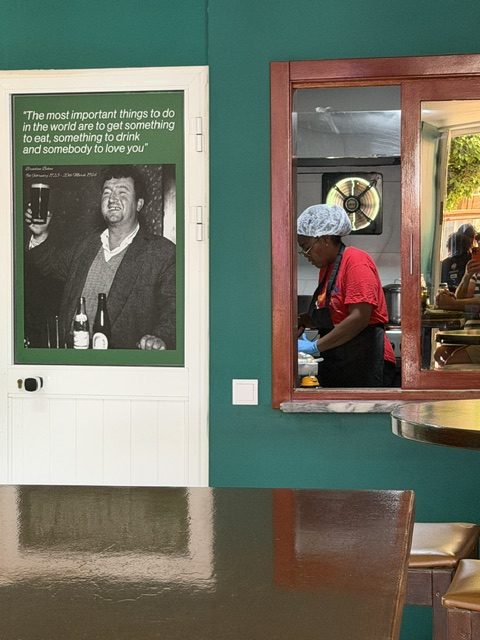
Rather than browse the stalls, we made a beeline back towards the ship and along the way stumbled across an Irish pub, of all places. Never has an Irish pub looked so inviting.
The facilities were spotless, the owner turned out to be Irish and had been living in Cabo Verde for 15 years, and we ended up staying for lunch and a good long chat with the Publican. I do love an Irish accent 🙂
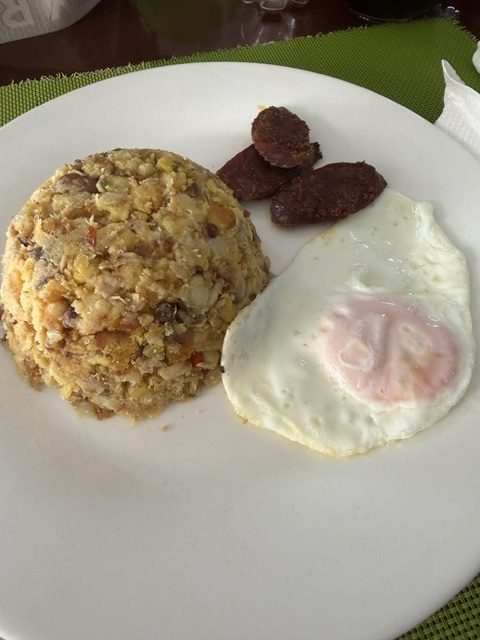
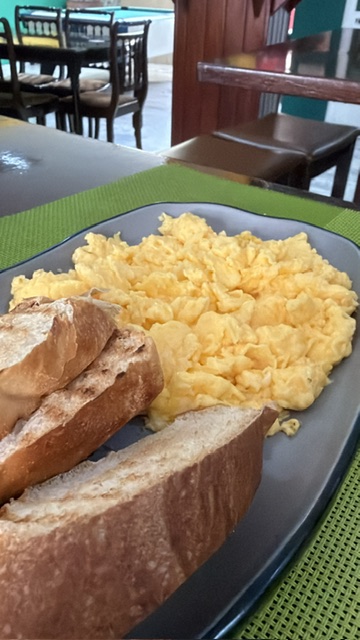
I ordered Cachupa—the national dish—a hearty stew of corn, beans, spicy sausage and a fried egg. Dave kept things simple with scrambled eggs and toast.
The food was delicious, the owner gave us a 10 per cent discount, and lunch for the two of us, including drinks, came to just over A$14.
Sometimes the unplanned stops end up being the best ones.
A few things we learned about Cabo Verde…
- The islands were completely uninhabited until Portuguese explorers arrived in the 1400s, making it one of the few countries in the world with no Indigenous population.
- After gaining independence from Portugal in 1975, Cabo Verde has become one of Africa’s most stable democracies and now enjoys one of the highest standards of living in West Africa. In fact, life expectancy has climbed to around 76 years—the highest we’ve encountered so far on this cruise and among the best on the African continent.
- In 2013 the government officially asked the rest of the world to use the Portuguese name “Cabo Verde” rather than the English “Cape Verde”.
- And a very random fact… the only animal found naturally on these islands is the long-eared bat.
Overall, Mindelo was a lovely surprise. It felt different from the other stops we’ve made. Cleaner, more relaxed, pleasant weather, decent roads, healthy-looking dogs, people swimming at the (clean) beach. To make it even better there was beautiful scenery, a fascinating history, very little rubbish, and a wonderfully relaxed atmosphere, especially at the country’s only Irish Pub!
We’ll now continue north towards Europe with two days at sea and then a stop in the Canary Islands.
Our cabin butler, Suresh, has been asking why I haven’t finished the one litre bottle of Belvedere Vodka he put in the room at the start of the cruise. He’s delivered tomato juice and ice, so it might be a nice time to make a Bloody Mary and enjoy it on our balcony while watching the ship sail away from lovely Cabo Verde.
More on Wednesday!
Sara xx
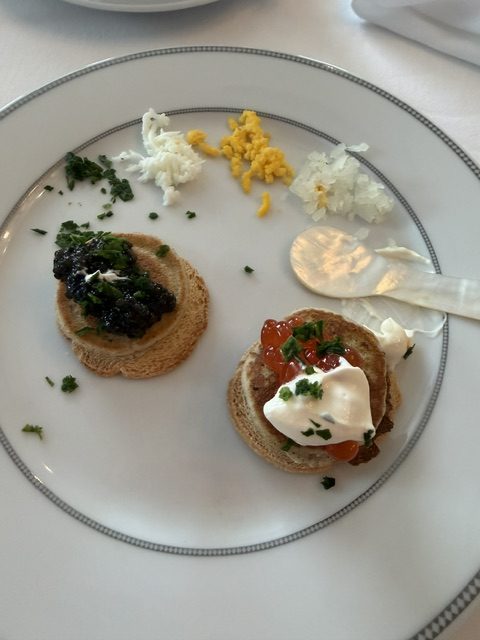
p.s. I had two types of Caviar with my breakfast 😉
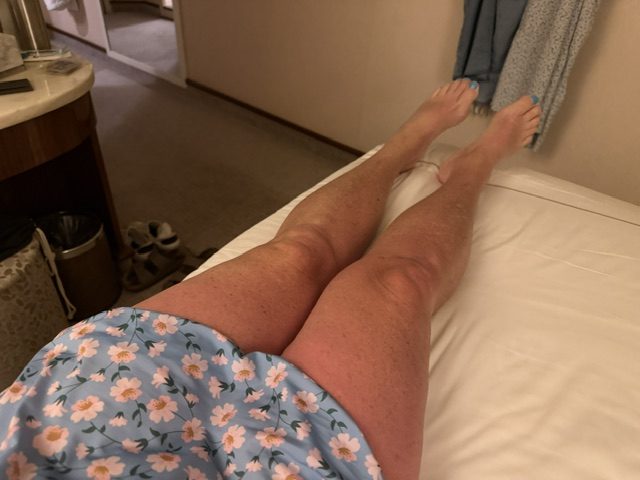
Oh, and also, yesterday I got a little sunburned 🙁
What extraordinary timing for visiting Cabo Verde! I have little interest in the World Cup, but even I was very happy for them. I had imagined it lush. I did spot the issue with your photo 🤣
I don’t have a lot of interest either – bit it is pretty impressive with it being such a small country!
Good spotting – as you know DM can be a little cheeky 😉