
Tuesday 13th October, 2026
I wasn’t planning to blog again quite so soon, but our day trip to Peleliu yesterday was too interesting not to document straight away. It was a day of spectacular scenery, fascinating World War II history, a Japanese bento lunch and enough heat and humidity to make me question my life choices!
Getting there
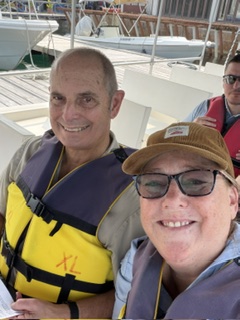
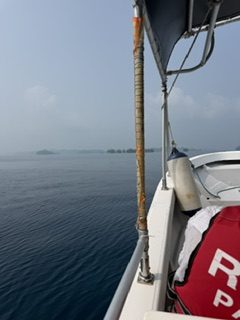
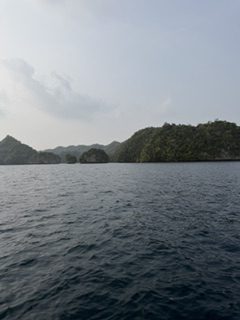
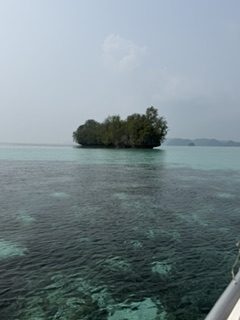
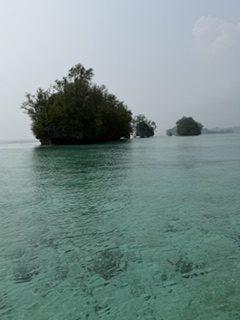
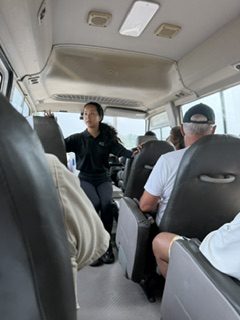
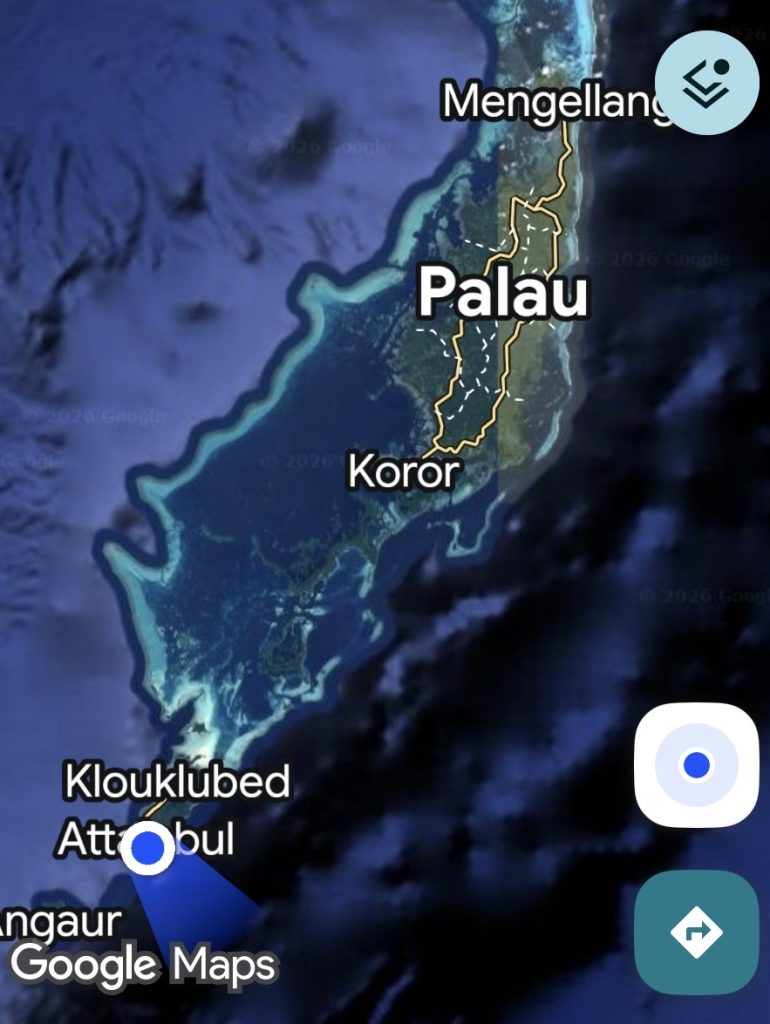
We caught a flat-bottomed boat from Koror Harbour for the one-hour journey to Peleliu. The seas were beautifully flat, and we passed countless little islands surrounded by impossibly blue Palauan water. The boat trip itself was worth the money and effort! Our tour was run by a Japanese company (RITC), with 15 guests in total. Our guide did a wonderful job translating into English for those few who did not speak Japanese and had even prepared written notes for us.
There was something special about exploring this history with a Japanese group, and in fact we had chosen it for this reason. Dave was hoping to meet a family member of someone who served here, but no luck with that, although all of us were there to learn about a terrible chapter of history and pay our respects to all those who lost their lives.
A little island with a big history
Peleliu is only about 13 square kilometres and had a population of around 470 at the 2020 census. Japan was on our side during World War I and was ceded Palau by the League of Nations in 1921, the same way Australia gained New Guinea and Nauru after defeating the Germans there in 1914.
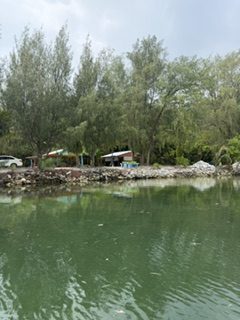
Today, it is peaceful and beautiful, making it difficult to imagine the destruction that took place here during World War II.
The Battle of Peleliu began on 15 September 1944, when American forces landed to capture the Japanese airfield. What was expected to be a relatively quick operation turned into one of the Pacific War’s bloodiest battles.
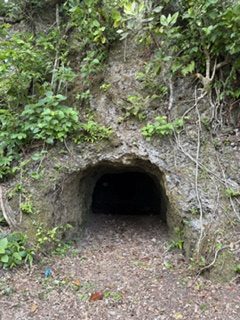
The Japanese had constructed an extensive network of caves, tunnels and fortified positions in the island’s limestone hills. Rather than defending the beaches alone, they sheltered underground and attacked from concealed positions.
The battle lasted more than two months. Nearly 11,000 Japanese military personnel were killed, along with more than 1,500 Americans killed in action, while thousands more Americans were wounded.
And all this fighting took place on a tiny tropical island.
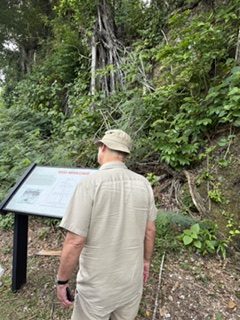
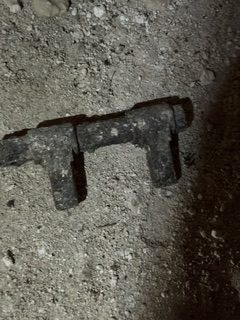
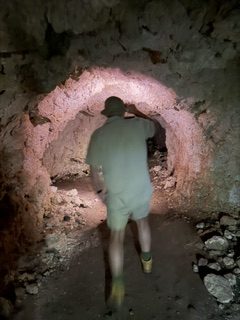
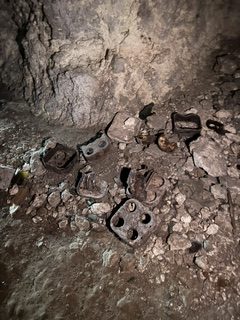
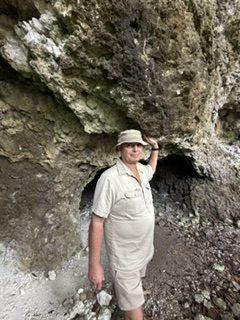
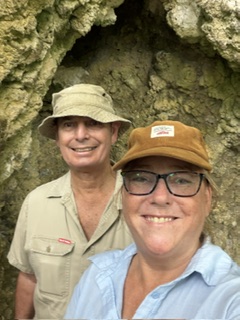
Our tour began with a quick look at a Japanese pillbox and then the enormous cave system, including the famous ‘1,000-man cave’. We were able to walk through part of the limestone caves, which was fascinating. It’s one thing to read about this, but another to stand inside them. Dave did knock his head at one point, and we all had to use torches to find our way through.
It was already incredibly hot and humid for us, and we had a minibus, modern clothing and plenty of water. I cannot imagine what conditions must have been like for soldiers fighting here in 1944.
Remembering the fallen
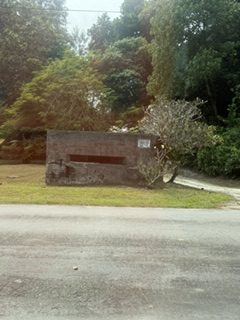
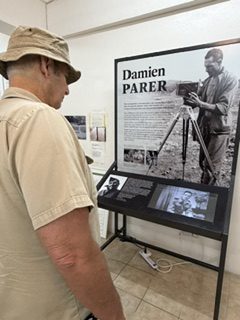
We visited the museum and then the cemetery, which also serves as Peleliu’s general cemetery today.
We took part in an incense and prayer ceremony, observing a moment of silence and bowing our heads to honour those who died.
It was a moving experience.
There are memorials around the island to both Japanese and American servicemen, a reminder that the human cost of war extends far beyond the battlefield.
One particularly remarkable story is that 34 Japanese soldiers remained hidden in Peleliu’s caves until April 1947, more than two years after the battle ended. They apparently believed the war was still going on and were reluctant to trust messages telling them Japan had surrendered. Eventually, they emerged and surrendered on 22 April 1947.
Imagine spending all that time hiding in caves, not knowing the war was over!
Tanks, bunkers and a Zero
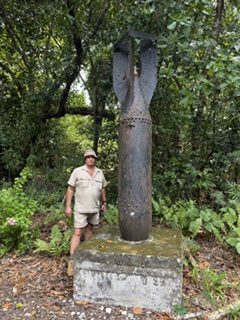
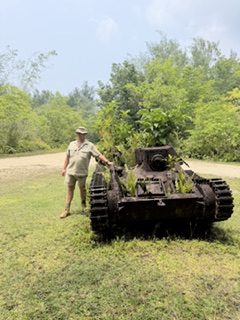
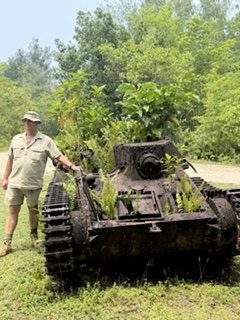
We continued around the island by minibus, stopping at a Japanese fuel bunker and a Japanese Type 95 Ha-Go light tank.
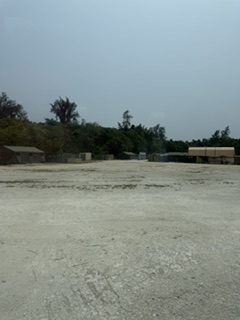
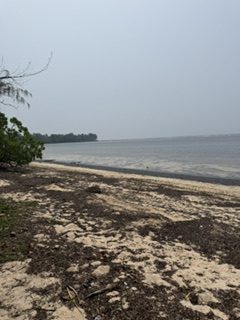
We also saw the old airfield, which was a major reason for the American invasion, and the beaches where American troops landed. American military personnel are back here at the moment renovating the runway and surrounds, I’m assuming to become a forward base for the US Airforce, though I’m sure they wouldn’t admit that. (Today the beaches look like beautiful holiday destinations rather than the scenes of fierce fighting.)
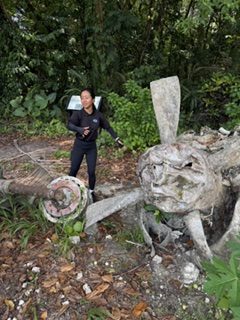
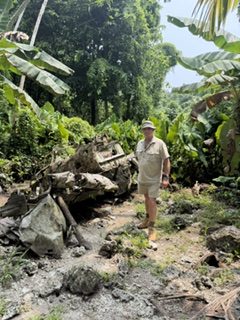
A short walk into the jungle took us to a Japanese Zero fighter aircraft, still sitting among the vegetation. There are wartime relics scattered across the island, making it feel like an enormous open-air museum. Dave was in his element!
It is extraordinary how much history remains here, slowly being reclaimed by the jungle.
Bento lunch and chopstick challenges
After a morning of history, we stopped at a lovely waterside park for lunch. Our Japanese bento boxes were delicious, although Dave had a little more difficulty with the chopsticks than he did with the military history! An older Japanese man took a liking to Dave and tried to teach him how to use chopsticks – without much success 😉
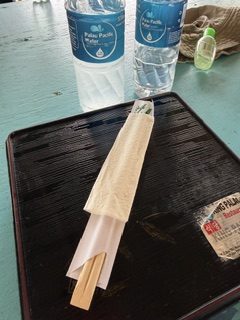
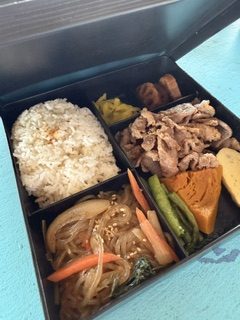
It was a beautiful spot to sit and enjoy the scenery, get to know some of our fellow tourists before heading back into the heat.
Peace, memorials and one hill too many
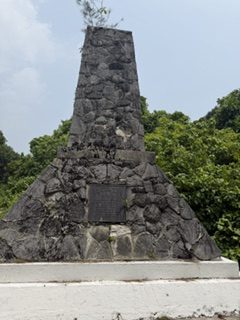
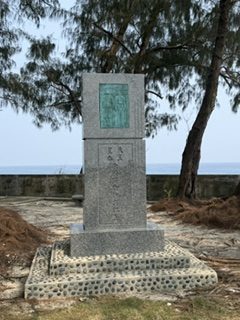
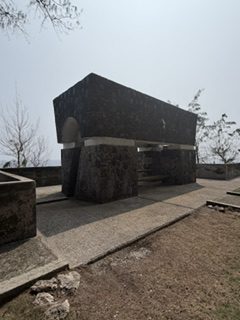
We visited the Peace Memorial Park at the southern end of the island. Japanese Emperor Akihito and Empress Michiko visited Peleliu in 2015 to pay tribute to those who died, including at memorials honouring Japanese and American forces.
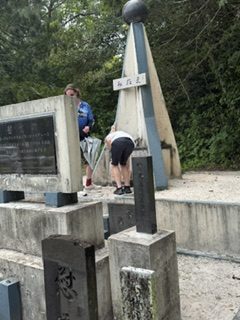
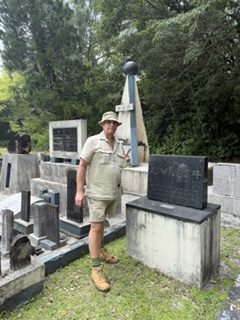
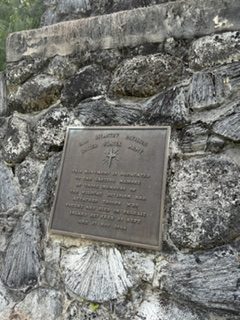
We then drove towards the centre of the island, where the rugged limestone hills were the scene of some of the fiercest fighting. We saw the Peleliu Shrine, a Buddhist shrine and a memorial to the American Marines.
There was also the option of climbing Bloody Nose Ridge, one of the most notorious battle sites on the island.
Now, we love a bit of adventure, but after a full day in tropical heat, a steep climb up a ridge named Bloody Nose didn’t sound particularly appealing!
Most of our fellow travellers made the climb and reported fantastic views. I’m quite happy to admire them through their photographs. Sometimes the best thing to do is knowing when to sit one out. 😉
Back to Koror
Eventually, we headed back to the boat for the journey home.
Peleliu is a beautiful island, though its history is confronting. The beaches and jungle are peaceful today, yet the caves, tanks, aircraft and memorials tell the story of the terrible fighting that took place here.
One of the most memorable parts of the day was sharing the experience with a Japanese tour group. Despite our different backgrounds, there was a shared sadness and respect for everyone who suffered.
It was a long, hot and fascinating day — and a reminder that some of the world’s most beautiful places also hold some of its saddest stories.
We came away with a much greater appreciation of Peleliu’s history, some wonderful photos, and absolutely no regrets about skipping that hill!
A little travel cutlery set for Dave’s next birthday! That looks amazing, and while I think I would very much enjoy seeing the caves and the relics, I am glad not to be hot.